
'Look at what kind of sites the child is visiting, what kind of games they are playing and then tell them about the pitfalls.' 'After the child sleeps, parents can check the history of sites visited and block sites that could be dangerous or inappropriate.'

'Even if it is defeated and the Speaker remains, the Opposition parties that have lost faith in his impartiality will continue to have that feeling.' 'If the Speaker reflects on this and tries to be more neutral, more impartial, more objective in his conduct -- then one can say the resolution had a salutary effect. That would be the best outcome.'

According to the Economic Survey 2026, the appropriate stance for 2026 is therefore one of strategic sobriety rather than defensive pessimism.

US President Donald Trump asserted that the trade deal with India remains intact despite a Supreme Court ruling against his tariffs, while also claiming he used tariffs to stop a war between India and Pakistan.

The police have certain logistical limitations in monitoring the movement of every individual, Banerjee said.

'He must have been aware of the consequences, that too against Mrs Indira Gandhi, who at that point in time was all powerful. The easiest way out would have been to dismiss the petition, but he didn't do that'
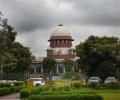
The Supreme Court criticized the Haryana government for uprooting 40 trees to build a road to a BJP office in Karnal, demanding a remedial plan and warning of consequences.

Banks cannot treat compliance as a quarter-end activity, and must have stronger operational discipline and data governance throughout the year, Reserve Bank of India (RBI) Deputy Governor Swaminathan J said in a speech at the Third Annual Global Conference of the College of Supervisors.

The Allahabad high court on Saturday pulled up the Uttar Pradesh Police for the 'illegally detention' of an interfaith couple without any direction/order for taking them into custody, and ordered their release.

The Supreme Court has questioned the practice of Governors withholding assent to bills indefinitely, stating that it renders the constitutional provision of 'as soon as possible' meaningless.
The Delhi High Court has ordered a retrial in a 1984 anti-Sikh riots case related to the killing of a man in Ghaziabad's Raj Nagar area, citing a flawed investigation and trial.

Tamil Nadu's ruling DMK has filed a petition in the Supreme Court challenging the Election Commission's plan to implement the Special Intensive Revision of electoral rolls in the state.
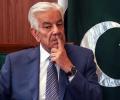
The entry of other Arab countries in the mutual defence deal between Pakistan and Saudi Arabia is not ruled out, Defence Minister Khawaja Asif has said, adding that 'doors are not closed' for such developments.
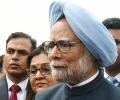
Amid disruptions in the Lok Sabha, opposition parties are protesting the denial of speaking rights to the Leader of Opposition, Rahul Gandhi, during discussions on the President's address. The Congress party draws parallels to a similar incident in 2004 when then-Prime Minister Manmohan Singh was prevented from speaking.
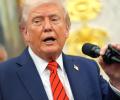
Trump, who had expected to receive the prize for his efforts to "end seven wars," also linked the conflict in Ukraine to his broader peacemaking claims.
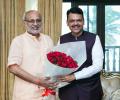
'The law under the guise of security represents a grave and unnecessary expansion of State power at the cost of fundamental rights,' asserts Aakar Patel.
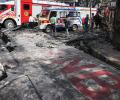
The Supreme Court has raised concerns about the preliminary report on the Air India crash and has asked for a more independent and thorough investigation.
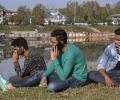
'Instead of the government and telecom operators solving the mess of their own creation, they're telling us we need to give access to our phones perpetually.'

The Supreme Court has sought a response from the Election Commission on a plea by Trinamool Congress MPs alleging irregularities in the revision of electoral rolls in West Bengal.

The US Coast Guard seized a Russian oil tanker, the Marinera, in the North Atlantic. The crew includes three Indian citizens. Moscow has protested the seizure, calling it a violation of international maritime law and demanding humane treatment of the crew.
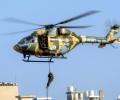
'The tools of warfare are changing. The MoD must deepen its engagement with technology thinkers that can present compelling visions of where warfare may be heading.'

The Central Board of Film Certification (CBFC) has directed the removal of several scenes, including those depicting the eating of beef biriyani and dialogues on 'dhwaj pranam', from the upcoming Malayalam movie Haal starring Shine Nigam.
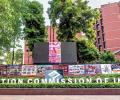
The Election Commission (EC) defended its power to revise electoral rolls and ensure no foreigners are registered as voters before the Supreme Court. The EC argued it has a constitutional duty to maintain the purity of electoral rolls and exclude those not eligible to vote.

The application claimed that since the inception of the SIR process in the state, the EC has issued instructions to officers at the ground level through "informal and extra-statutory channels", such as WhatsApp messages and oral directions conveyed during video conferences, instead of issuing formal written instructions.

'Large firms and their interests can dominate the narrative, even as smaller stakeholders and retail investors struggle to be heard.' 'Regulators therefore require deep subject-matter expertise to assess representations, recognise underlying incentives, incorporate the perspectives of less-visible stakeholders, and guard against bias or capture,' notes Ananth Narayan.
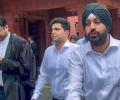
Commercial and prohibited speeches are not covered under fundamental rights, the Supreme Court on Monday said as it asked five social media influencers, including India's Got Latent host Samay Raina, to display their unconditional apology in their podcasts or shows for ridiculing persons with disabilities and rare genetic disorders.
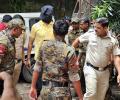
A magistrate's court in Mumbai, which denied permission for subjecting dismissed RPF constable Chetansinh Chaudhary, accused of shooting four persons dead on a moving train, to narco tests has said in its reasoning that to remain silent is an accused person's fundamental right.

Chief Justice of India Bhushan Ramkrishna Gavai retired, reflecting on his career, commitment to the Constitution, and social justice.

During an open house discussion with stakeholders on the draft Digital Personal Data Protection (DPDP) bill 2022, Chandrasekhar said that the right to privacy is a fundamental right while the right to information is not. "Right to privacy is a fundamental right and right to information is not.

Indian Super League (ISL) clubs on Friday formally proposed a fundamental restructuring of the country's top-tier professional football league, seeking perpetual operational and commercial rights for a club-owned league model while retaining the All India Football Federation (AIFF) as the sport's regulator.
He said the Constitution provides for the right to silence, which means an individual can refuse to answer questions from the police in case of arrest or detention.
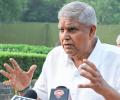
Vice President Jagdeep Dhankhar stated that the Preamble of the Indian Constitution is fundamental and unchangeable, comparing it to parenthood. He also criticized the alteration of the Preamble during the Emergency era, amidst calls for review of certain terms.

Authorities on Saturday barred Eid prayers from taking place at the Eidgah ground and the Jama Masjid in the old city in Srinagar, while Hurriyat Conference chairman Mirwaiz Umar Farooq claimed that he was put under house arrest.

Canadian Prime Minister Mark Carney on Tuesday warned that the world is witnessing a fundamental 'rupture' in the global order rather than a gradual transition, cautioning against weaponising trade, finance, and supply chains.

The country's largest IT services firm Tata Consultancy Services on Wednesday outlined an aggressive plan to become the "world's largest AI-led technology services company" as CEO K Krithivasan shared that the company has logged about $1.5 billion in annualised revenue.
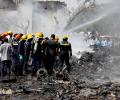
Civil Aviation Minister K Rammohan Naidu assures a clean investigation into the Air India plane crash, dismissing concerns of manipulation. The statement follows calls for a judicial probe and criticism of selective leaks from the preliminary report.
The top court said an accused has a right to voluntarily undergo a narco-analysis test at an appropriate stage.
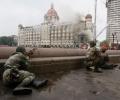
The Maharashtra government informed the Bombay High Court that Faheem Ansari, acquitted in the 26/11 terror attack case, was denied a police clearance certificate due to ongoing suspicion of being a member of a banned terror organization. Ansari sought the certificate to operate an autorickshaw.

Michael Vaughan believes England's victory in the Boxing Day Ashes Test at the Melbourne Cricket Ground was a 'lottery'.

Gitanjali Angmo, wife of climate activist Sonam Wangchuk, has filed a plea in the Supreme Court seeking his release from detention under the National Security Act. Wangchuk was detained following protests in Ladakh. The plea challenges his detention and alleges violations of due process.
